


.png)
Property maintenance programs are essential for anyone responsible for the upkeep and value of real estate assets, including property managers, landlords, and facility managers. This comprehensive guide explains the purpose and benefits of structured maintenance programs, offering actionable strategies to streamline operations, reduce costs, and enhance tenant satisfaction. Whether you manage a single rental property or a large portfolio, understanding and implementing a property maintenance program is key to ensuring long-term asset performance, regulatory compliance, and operational efficiency.
Key Takeaways
- A property maintenance program is a structured, year-round plan that combines preventive, reactive, and seasonal tasks across all assets in a building or portfolio.
- Well-run programs typically cut emergency repairs by 15–30% within 12–18 months and improve tenant satisfaction and retention.
- Successful programs rely on clear processes: standardized work requests, prioritized work orders, documented inspections, and consistent record-keeping.
- Digital tools, including CMMS platforms and record systems like HouseFacts, make it easier to track maintenance history, spending, and compliance across multiple properties.
- Even small landlords can start with a simple annual calendar and basic tracking, then scale to more advanced software and analytics as the portfolio grows.
- Property maintenance programs benefit facility managers, property maintenance companies, and real estate portfolios of all sizes by streamlining operations, ensuring compliance, and supporting efficient management across diverse property types.
What Is a Property Maintenance Program?
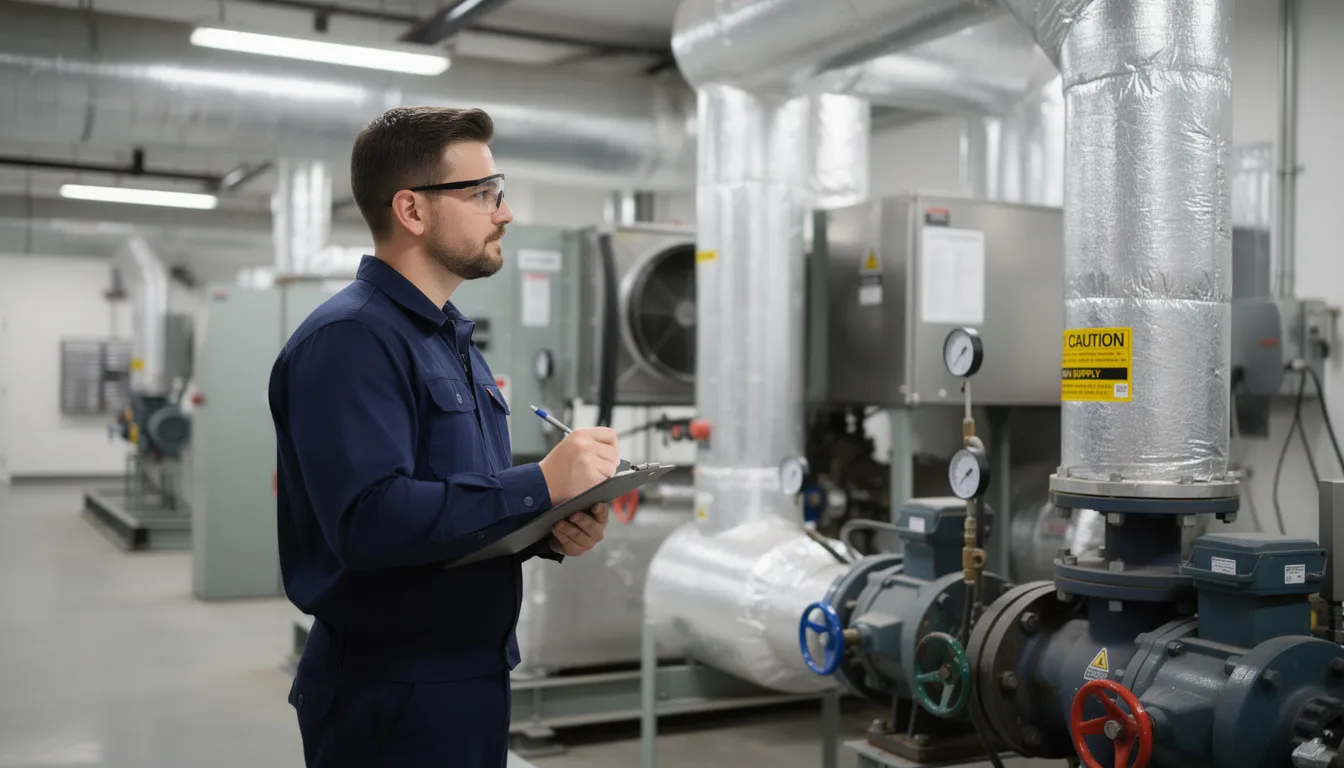
A property maintenance program is an organized framework for planning, scheduling, and documenting all maintenance activities across a property or portfolio. Rather than waiting for things to break, a formal program establishes routines, assigns responsibilities, and creates accountability for keeping buildings in optimal condition throughout the year. Facility managers and property maintenance companies rely on these programs for effective asset management and oversight, ensuring operational efficiency and compliance across various property types.
Every effective program combines three core components:
.png)
In practice, these components translate into specific maintenance tasks:
- Annual boiler inspections
- Quarterly HVAC filter changes
- Monthly life-safety checks
- Weekly common-area walkthroughs
- Same-day response to urgent leaks
The program defines who handles each task, when it happens, and how completion gets documented. Asset management is a core benefit of property maintenance programs, as they help track, maintain, and optimize physical assets throughout their lifecycle.
Property maintenance programs apply across different asset types:
- Residential apartments and residential buildings: Common area cleaning, unit turnover prep, appliance servicing
- Commercial property and office buildings: Elevator maintenance, lobby upkeep, mechanical system servicing
- Retail centers: Parking lot maintenance, storefront appearance, loading dock repairs
- Mixed-use properties: Coordinating residential and commercial needs on a single site
These programs also support real estate portfolios by providing scalable solutions for property managers, real estate investors, and developers to maintain and manage diverse assets efficiently.
Modern programs are typically documented digitally rather than on paper. Property managers use spreadsheets, computerized maintenance management system platforms, or tools that store property data and maintenance history such as HouseFacts to keep everything organized and accessible. Using property maintenance software streamlines operations, improves task management, and enhances coordination among maintenance teams and property managers.
Why Property Maintenance Programs Matter
Consider two identical apartment buildings constructed the same year. One operates with a structured maintenance program; the other relies on fixing things only when they break. After ten years, the first building maintains strong tenant satisfaction scores, predictable operating costs, and equipment running near its full lifecycle. The second faces chronic complaints, emergency repair bills, and systems failing years ahead of schedule.
This difference illustrates why property maintenance programs matter across tenant satisfaction, operating costs, and asset value.
Reducing Unplanned Downtime
Structured programs reduce unplanned downtime significantly. Fewer elevator outages during busy hours. Fewer HVAC failures during heat waves or cold snaps. Industry benchmarks suggest well-implemented preventive maintenance programs can achieve 20–40% reductions in emergency work orders compared to purely reactive approaches.
When property management teams can schedule preventive maintenance around tenant schedules and building operations, they minimize disruption while maintaining critical systems.
Financial Impact
The financial case for property maintenance programs centers on lifecycle costs. Consider a commercial HVAC unit:
.png)
The same logic applies to roofs, plumbing systems, and major equipment. Regular care extends useful life, defers expensive capital replacements, and reduces maintenance costs over time. The cost savings compound across a property portfolio.
Risk and Compliance
Scheduled inspections support fire safety, accessibility, and local code requirements. Annual fire alarm tests, elevator certifications, backflow prevention testing—these aren’t optional. A formal program ensures nothing gets overlooked, reducing fines and legal exposure.
Tenant and Owner Outcomes
The downstream benefits include:
- Improved online reviews and reputation
- Lower turnover and reduced vacancy costs
- More predictable capital planning
- Easier resale with clear maintenance records
- Higher tenant experience scores
Property owners who maintain detailed maintenance data can demonstrate building condition to lenders, insurers, and potential buyers with confidence.
Core Elements of an Effective Property Maintenance Program
Regardless of property size, every maintenance program needs certain building blocks in place. These elements create the structure that makes consistent execution possible across your entire team.
Clear Scope Definition
Define exactly which buildings, systems, and areas the program covers. For a typical 100-unit residential building, this might include:
- Mechanical systems: HVAC units, boilers, water heaters, pumps
- Electrical systems: Panels, lighting, emergency generators
- Plumbing: Supply lines, drains, water treatment equipment
- Building envelope: Roof, windows, exterior walls, waterproofing
- Shared spaces: Lobbies, hallways, laundry rooms, fitness centers
- External areas: Parking lots, landscaping, walkways, signage
Asset Register Creation
Create an inventory of every major asset. For each item, document:
- Make, model, and serial number
- Installation date
- Warranty expiration
- Service requirements and intervals
- Current condition
- Location within the property
This process is a foundational step in effective asset management for property maintenance programs.
This asset tracking foundation enables informed decisions about repair-versus-replace and supports long-term capital planning.
Maintenance Standards and Response Targets
Set clear expectations for how quickly different issue types get addressed:
.png)
These standards help maintenance teams prioritize work requests and keep everyone on the same page about expectations.
Documented Workflows
Establish clear processes for:
- How tenants or staff submit service request tickets
- How priorities are assigned
- Who approves and dispatches work
- How technicians document completion
- Who reviews and closes out work orders
Define responsibilities at each step—property manager, team member, technician, external vendor—so nothing falls through the cracks.
Centralized Documentation
Store inspection reports, photos, invoices, and maintenance logs in one accessible location. Manual processes using scattered paper files create gaps and inefficiencies. Digital systems like a CMMS or a property record platform such as HouseFacts provide long-term tracking that supports better day to day operations and historical analysis.
Types of Maintenance Within a Program
Robust programs blend several maintenance strategies rather than relying solely on reactive repairs. Understanding these categories helps property management teams allocate resources effectively.
Preventive Maintenance
Schedule preventive maintenance tasks before problems occur. Common examples include:
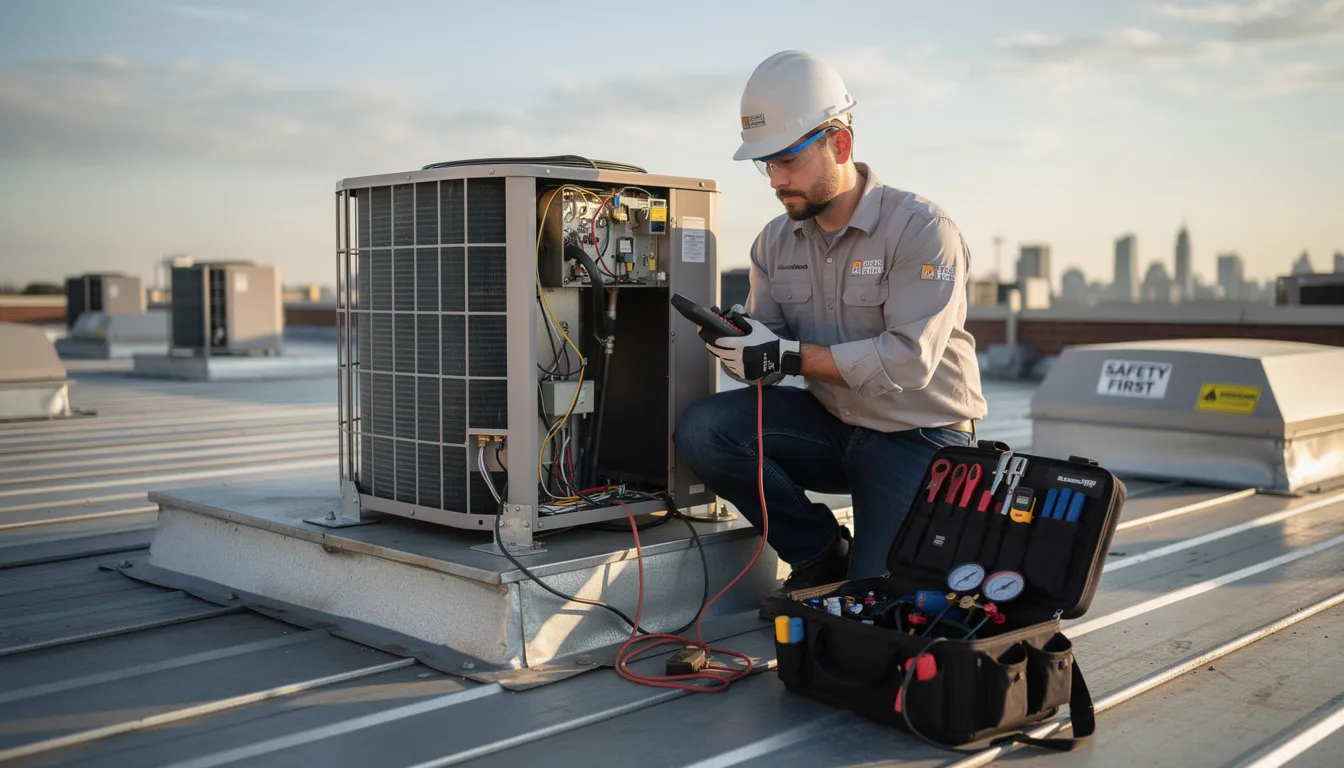
- Seasonal HVAC servicing: Spring and fall tune-ups for heating and cooling systems
- Annual backflow testing: Required for fire suppression and irrigation systems
- Semiannual roof inspections: Catching minor issues before they become major leaks
- Quarterly pest control: Preventing infestations rather than reacting to them
- Monthly filter changes: Maintaining air quality and equipment efficiency
Preventive maintenance represents planned maintenance at its core—routine tasks completed on schedule to extend equipment life and prevent failures.
Reactive Maintenance
Despite best efforts, issues arise unexpectedly. Reactive maintenance addresses:
- Leaks reported by tenants
- Broken locks or door hardware
- Power outages affecting units
- Equipment failures
- Weather damage
The key is triaging these requests effectively. Not every issue demands immediate response. A formal priority system prevents minor inconveniences from jumping ahead of genuine emergency repairs.
Predictive or Condition-Based Maintenance
When maintenance data from sensors and monitoring systems is available, property management operations can shift toward predictive approaches:
- Monitoring elevator fault codes to schedule service before failures
- Tracking boiler sensor readings for performance degradation
- Analyzing vibration data on pumps to detect bearing wear
- Using energy monitoring to identify HVAC efficiency drops
This data driven approach requires investment in monitoring technology but can significantly reduce equipment downtime and surprise failures.
Seasonal and Regulatory Maintenance
Some maintenance activities follow the calendar or regulatory requirements:
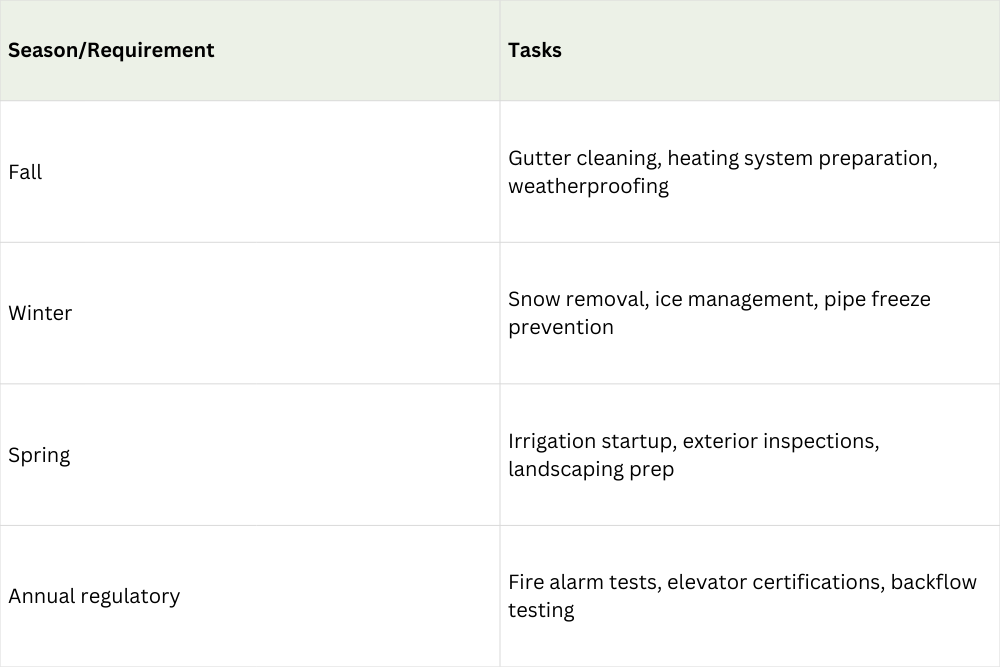
Local regulations determine specific requirements and timelines for inspections and certifications.
Why Mixing Approaches Matters
A property that relies solely on reactive maintenance spends more on emergency repairs and experiences shorter equipment lifecycles. Blending preventive, predictive, and reactive strategies creates balance—planned work reduces surprises, while efficient reactive processes handle the unexpected.
Commercial Property Maintenance
Maintaining commercial properties—such as office buildings, retail centers, and industrial facilities—presents unique challenges due to their size, complexity, and regulatory requirements. Property maintenance software is indispensable for commercial property managers who need to ensure compliance, protect tenant safety, and minimize operational disruptions.
With the right property maintenance software, property managers can schedule preventive maintenance, efficiently track maintenance requests, and manage a wide range of maintenance tasks from a single, centralized platform. A computerized maintenance management system (CMMS) streamlines these processes, allowing managers to automate recurring inspections, monitor asset performance, and generate detailed reports. To learn more about the mission and values behind innovative property management solutions, visit the HouseFacts About Us page.
Designing a Property Maintenance Program Step by Step
Whether you manage a single rental property or a large property portfolio, the process of building a maintenance program follows similar steps. The difference lies in scale and complexity, not the fundamental approach.
Step 1: Assess Current State
Start with a baseline inspection of the property. Document:
- Current condition of all major systems
- Existing maintenance logs (if any)
- Recurring issues (frequent plumbing calls, chronic HVAC complaints)
- Deferred maintenance backlog
- Compliance status for required inspections
This assessment reveals what needs immediate attention and provides a starting point for measuring improvement.
Step 2: Build an Asset Inventory
Create a comprehensive list of all critical equipment and building components:
- Major mechanical equipment (boilers, chillers, HVAC units, pumps)
- Electrical systems and panels
- Plumbing infrastructure
- Life-safety systems (fire alarms, sprinklers, emergency lighting)
- Elevators and conveyance systems
- Roofing and envelope components
For each asset, record make, model, age, warranty expiry dates, and last service date. This inventory management foundation supports everything that follows.
Step 3: Define Maintenance Tasks
For each asset, outline required tasks and frequencies based on:
- Manufacturer recommendations
- Local code requirements
- Climate considerations
- Historical performance data
A boiler might require annual combustion analysis, quarterly safety checks, and monthly visual inspections. HVAC units might need filter changes monthly and professional servicing twice yearly.
Step 4: Develop a Yearly Maintenance Calendar
Map out monthly, quarterly, and annual tasks. Concrete examples:
.png)
Recurring inspections should appear automatically on the calendar each year.
Step 5: Establish Request and Work Order Processes
Define clear workflows:
- Submission: How tenants or staff report issues (online portal, phone, app)
- Triage: Who reviews and prioritizes incoming requests
- Assignment: How work gets dispatched to technicians or vendors
- Tracking: How progress is monitored
- Closure: How completion is documented and verified
Work requests should flow through a centralized system rather than getting lost in emails or voicemails.
Step 6: Set KPIs and Tracking
Define metrics to measure program effectiveness:
- Average response time by priority level
- Work order completion time
- Percentage of planned vs. reactive work
- Maintenance cost per unit or per square foot
- Tenant satisfaction scores related to maintenance
- Number of repeat issues
These KPIs provide data driven insights for continuous improvement.
Step 7: Implement Tools and Training
Start with basic digital tracking if you’re new to formal programs. Simple spreadsheets work for smaller operations. As complexity grows, specialized tools become valuable.
Systems such as a CMMS or HouseFacts can centralize property data, maintenance history, and documents for easier execution. Mobile devices enable technicians to receive tasks, upload photos, and close work orders from the field.
Train your team on new processes and tools. Automating workflows only helps if people use the systems correctly.
Step 8: Review and Improve Annually
Schedule an annual review each January. Analyze the previous year’s data:
- Which assets required more attention than expected?
- Where did emergency repairs cluster?
- Which vendors performed well or poorly?
- How did actual costs compare to budget?
Use findings to adjust task frequencies, budgets, and vendor strategies for the coming year.
Property Management Companies and Teams
Property management companies and their teams are at the heart of successful property maintenance and tenant satisfaction. Modern property management software is designed to empower these teams by streamlining maintenance processes, improving communication, and providing real-time visibility into all maintenance activities.
Emergency Maintenance and Repairs
Emergency maintenance and repairs are inevitable in property management, but their impact can be minimized with the right tools and processes. Property maintenance software provides property managers with a centralized platform to handle urgent maintenance requests, assign work orders, and coordinate with contractors—all in real time.
Sustainability and Energy Efficiency
Sustainability and energy efficiency are top priorities for today’s property managers, offering significant benefits in cost savings, tenant satisfaction, and property value. Property maintenance software plays a vital role in supporting these initiatives by providing a centralized platform to monitor energy usage, track equipment performance, and optimize maintenance operations.
Property Maintenance Software and Digital Tools for Running Property Maintenance Programs
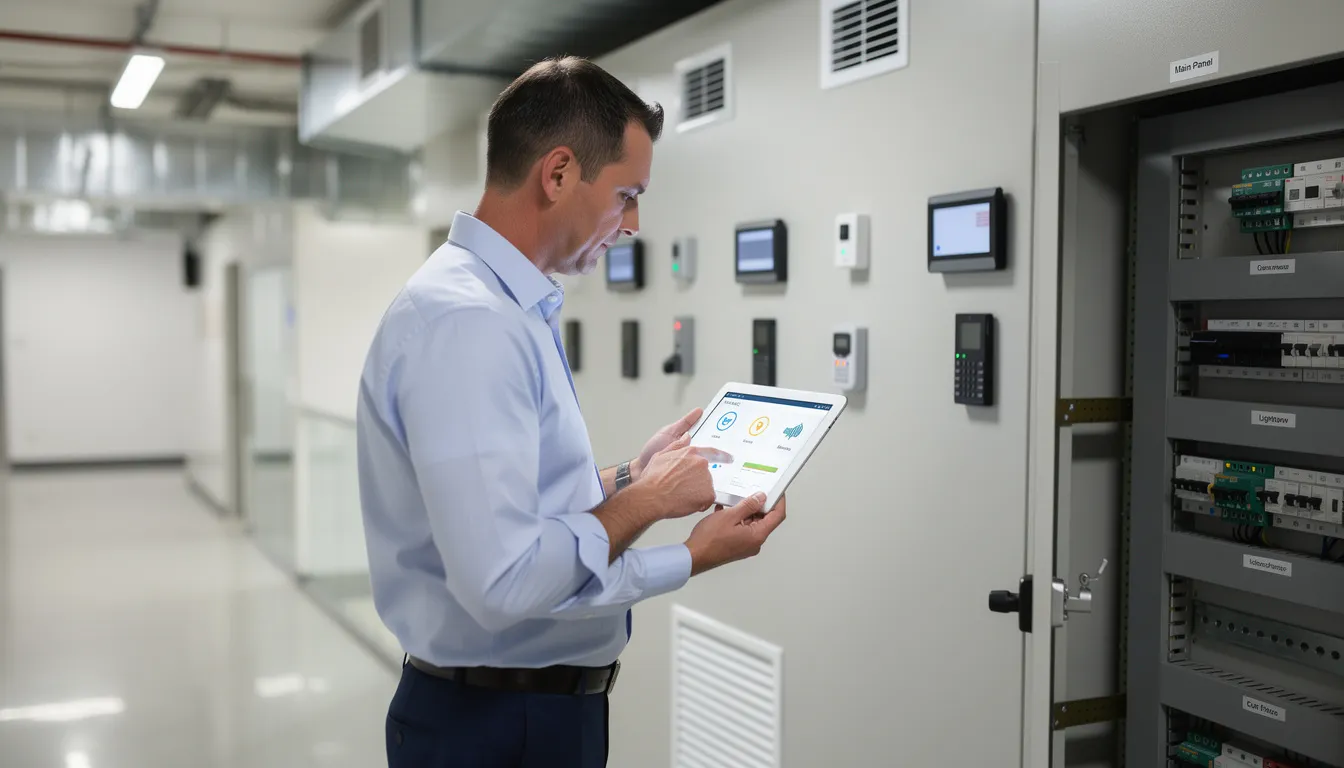
Digital tools support consistency, transparency, and data driven decisions, especially when managing multiple buildings or a growing portfolio.
Computerized Maintenance Management Systems (CMMS)
Property management CMMS platforms serve as the operational backbone for maintenance programs. Core capabilities include:
- Work order management: Creating, assigning, and tracking maintenance requests
- Preventive maintenance scheduling: Automating recurring task generation
- Asset tracking: Maintaining equipment records and service history
- Reporting: Generating cost, performance, and compliance reports
- Inventory management: Tracking spare parts and supplies
The right property maintenance software facilitates communication between property management teams, maintenance teams, and vendors while creating accountability through documented workflows.
Mobile Access
Property maintenance management software with mobile app functionality enables on-site technicians to:
- Receive work orders in real time
- Access asset information and maintenance history
- Upload completion photos
- Log labor hours and materials used
- Close out work immediately
This eliminates delays between work completion and documentation, keeping records current and accurate.
Property and Asset Record Systems
Beyond operational CMMS functions, property managers need long-term documentation storage. Tools like HouseFacts help keep organized records of:
- Inspection histories across years
- Repair records and costs
- Warranties and manuals
- Capital project notes
- Compliance documentation
Having this information accessible in one platform supports better capital planning, insurance reviews, and property sales.
Integration Opportunities
Modern property management software connects with other systems:
- Accounting software: Syncing maintenance costs with financial records
- Access control: Coordinating vendor site access
- Energy monitoring: Correlating equipment performance with consumption
- Tenant portals: Enabling online service request submission
Measuring and Improving Your Program Over Time
Successful maintenance programs are iterative. They evolve based on performance data, feedback, and changing building conditions rather than remaining static year after year.
Key Performance Indicators to Track
Monitor these metrics to assess program health:
.png)
Trend Analysis
Compare data quarter over quarter and year over year:
- Are emergency calls decreasing as preventive maintenance matures?
- Is after-hours work declining as systems stabilize?
- Are high-cost repairs concentrating in specific systems?
These patterns inform resource allocation and capital planning decisions.
Tenant Feedback
Systematically gather input through:
- Post-work order satisfaction questions
- Annual tenant surveys
- Review of online reviews and comments
This feedback identifies service gaps that metrics alone might miss. Happy tenants lead to better retention and improve tenant satisfaction scores across the portfolio.
Supporting Capital Planning
Maintenance records—stored in CMMS, spreadsheets, or property record platforms like HouseFacts—support major decisions. When that 20-year-old boiler needs attention in 2027, historical repair data helps determine whether to continue repairing or proceed with replacement.
Annual Program Reviews
Each year, assess:
- Staffing levels: Are current resources adequate?
- Vendor performance: Who deserves more work, who needs replacement?
- Inspection frequencies: Too often? Not often enough?
- Budget accuracy: How did projections compare to actuals?
Adjust the program based on what the data and feedback reveal rather than assumptions.
Common Challenges and Practical Solutions
Even well-designed programs face real-world constraints. Acknowledging these challenges—and having strategies to address them—makes implementation more realistic.
Limited Budgets
When resources are tight, prioritize based on impact:
- Life-safety systems: Fire alarms, emergency lighting, sprinklers
- Compliance requirements: Required inspections and certifications
- High-impact systems: HVAC, roof, plumbing
- Tenant-facing elements: Common areas, unit systems
- Cosmetic items: Painting, landscaping improvements
This framework focuses spending where it matters most while deferring less critical work.
Incomplete Historical Data
Missing records shouldn’t paralyze progress. Start with a clean baseline inspection and build records going forward rather than delaying until all past information is perfect. Within 2–3 years, you’ll have meaningful data to inform decisions.
Staff and Vendor Coordination
Keeping everyone on the same page requires:
- Standard operating procedures for common tasks
- Simple checklists for recurring inspections
- Clear communication protocols for handoffs
- Defined escalation paths for issues
A customer success team or designated point person can help maintain consistency across property management operations.
Documentation Fatigue
Maintenance teams may resist detailed documentation requirements. Make it easier:
- Use tools that reduce manual data entry
- Enable photo-based updates from mobile devices
- Set realistic expectations about which data is truly critical
- Focus on completion verification rather than lengthy narratives
Scaling from Single Property to Portfolio
Growing from one building to many requires:
- Consistent templates across properties
- Shared maintenance calendars
- Centralized records accessible to the entire team
- Standardized vendor relationships
- Portfolio-level reporting
Multi family rentals, apartment complexes, student housing, community associations—each property type has nuances, but the underlying program structure should remain consistent.

Bringing It All Together
A property maintenance program isn't a one-time setup — it's a system that compounds. The first year, you build the asset register, the calendar, and the workflows. The second year, you start seeing fewer emergency calls. By year three, your maintenance data tells you which assets to replace before they fail, which vendors to keep, and where capital should go next.
The size of your portfolio determines which tools you'll need, but the underlying structure is the same whether you manage one rental or fifty. Start with the basics — a defined scope, an asset inventory, a yearly calendar, and a documentation system — and scale the tooling as the program matures.
The properties that get this right end up cheaper to operate, easier to insure, and worth more at sale. The ones that don't end up paying for it twice — once in emergency repairs, and again at refinance, claim, or sale time when the records aren't there.
Managing a small portfolio of properties yourself? HouseFacts gives every property its own organized record — maintenance history, warranties, receipts, and capital improvements all in one place. Built for owner-operators and small landlords who want CMMS-level documentation without CMMS-level complexity.
