Is It Cheaper to Leave Your AC On All Day or Turn It Off When You Leave?
 Elizabeth KiselevJuly 14, 20268 min read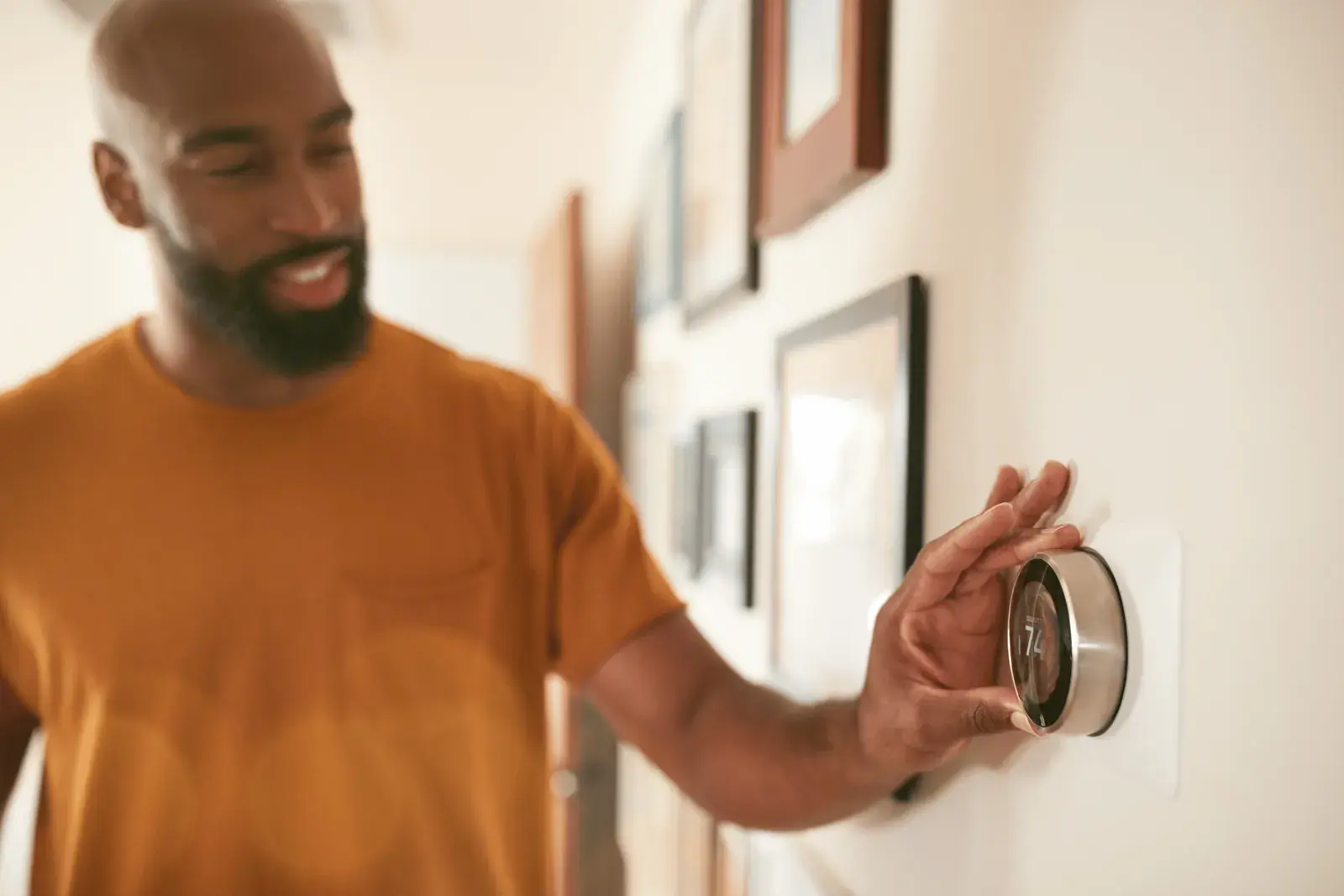
For a normal day away from home, it's usually cheaper to raise your thermostat by 7 to 10 degrees than to turn the AC off completely. The U.S. Department of Energy recommends raising your thermostat by 7 to 10°F for about 8 hours a day when you're not home, which can cut annual cooling costs by up to 10%.
Turning the system fully off seems like it should save more, since it uses no power at all while you're gone. But in practice, especially in humid climates, a fully-off AC often costs you more once you factor in the work it takes to recover, plus the moisture that builds up while it's off.
The one real exception: if you're leaving for several days, like a vacation, turning it off (or way up) does make sense. If you're leaving for several days, turning off the AC can save energy in that situation.
Here's the full reasoning, plus the factor that decides which answer is right for your home.
Does turning the AC off completely save money?
Less than you'd think, and sometimes it costs more.
The intuition is simple: an AC that's off uses no electricity, so off must be cheapest. The flaw is what happens when you get home. A house that's been sitting at full outdoor temperature all day has soaked heat into the walls, floors, and furniture. When you switch the AC back on, it has to pull all of that heat back out, which means running long and hard to recover.
Turning your AC off completely while you're away can increase your energy costs by about 20% compared to leaving it on and simply adjusting the thermostat. The savings you banked while it was off get eaten by the marathon cooling session when you return.
There's also a comfort cost. Leaving your AC on is usually preferable to turning it off completely, which can quickly introduce a lot of heat and humidity into your home, and even within a few hours the inside temperature can rise dramatically.
Why does leaving it off cost more in humid climates?
Because your AC isn't just cooling your home. It's drying it.
This is the part most people miss. When warm air passes over the cold evaporator coils in your AC, moisture in the air condenses into water and drains away, which is how air conditioning lowers humidity. An air conditioner that runs in normal cycles keeps your indoor air in a comfortable, dry range. One that's been off all day lets humidity climb back in.
That matters for two reasons. First, humid air feels hotter, so your AC has to work harder to make a humid house feel comfortable again. Humidity holds heat, so when there's excess moisture in your home, the AC works overtime to both cool the air and remove the moisture. Second, sustained high indoor humidity is bad for the house itself. High indoor humidity can encourage mold growth, damage wood furniture and floors, and force your AC to work harder, raising energy costs.
So in a humid climate, turning the AC fully off doesn't just cost you cooling. It costs you the dehumidification you'd otherwise get for free as a side effect of normal operation.
What temperature should I set the AC to when I'm away?
The widely recommended target is to set it around 78°F when you're home, and raise it 7 to 10 degrees above that when you leave.
Energy Star recommends setting your thermostat to 78°F when you're home and raising it by 7 to 10°F when you're away for maximum savings. So if you keep the house at 75°F when you're around, setting it to about 82 to 85°F while you're out hits the efficient zone without shutting the system off entirely.
At that higher setting, the AC doesn't run constantly. The system runs in cycles to maintain the set temperature while you're away, rather than running all day long. It does just enough to keep the house from heat-soaking and the humidity from climbing, which is exactly what makes the recover-when-you-get-home math work in your favor.
One myth worth clearing up while we're here: setting the thermostat lower does not cool your home faster. Your AC runs at a steady rate no matter the setting, and dropping it too low just makes it run longer, driving up your bill unnecessarily. Cranking it to 65 the moment you walk in doesn't speed anything up. It just runs the system harder for the same result.
Does a smart thermostat change the answer?
It makes the best strategy effortless.
The whole reason the "raise it, don't kill it" approach works is timing: the house stays in an efficient range all day, then cools back to comfortable right before you arrive. Doing that manually means remembering to adjust the thermostat twice a day. A programmable or smart thermostat does it automatically. You can set it to raise temperatures during your work hours and then cool the home before you return, avoiding discomfort while still capturing the savings.
If you've ever come home to discover the thermostat was set to "on" instead of "auto" and ran all day, a programmable model removes that risk entirely.
When should you actually turn the AC off?
There are a few clear cases where off (or close to it) is the right call:
Multi-day trips. Gone for a long weekend or a vacation? There's no recovery penalty worth worrying about across several days, so turning it off or setting it very high saves real money.
Mild weather. If outdoor temperatures drop into the 60s or low 70s, opening windows instead of running the AC can be more efficient, especially in dry climates with good airflow.
The exceptions to the exception. Even when you're away for a while, don't shut down completely if extreme heat could damage the house or anything in it, or if pets are home. In areas where temperatures exceed 90 to 100°F, a home can become dangerously hot, so it's better to let the AC run.
Why you keep getting different answers online
Because the right answer genuinely depends on your specific home, and most articles can't see yours.
How much a fully-off AC costs you depends on how well your house holds temperature, which comes down to your insulation, your windows, and how air-tight the home is. It depends on your climate and how humid your summers are. And it depends on the age and efficiency of your AC unit itself, an older, less efficient system pays a bigger penalty for the long recovery runs.
A tight, well-insulated home in a dry climate can get away with turning the AC off for the day. A leaky home in a humid one will pay for it. That's why a single universal rule never quite fits, and why the most accurate answer to "should I turn it off?" is "it depends on your home."
How HouseFacts helps
HouseFacts can help take the guesswork out of this: it stores your AC's age, model, and service history, and reminds you when maintenance like filter changes is due, so you always know which strategy fits your unit instead of relying on a generic rule of thumb.
DISCLAIMER This article is for general informational purposes only. Energy savings vary based on your climate, home, AC system, utility rates, and usage. The figures cited reflect general findings from the U.S. Department of Energy and Energy Star and are not a guarantee of savings for any specific home. For advice tailored to your system, consult a qualified HVAC professional.
SOURCES
[1] Sant Anna Energy Services. "Which Costs More? Turning Your AC On and Off vs. Leaving It On." February 2026. https://santannaenergyservices.com/which-costs-more-turning-your-ac-on-and-off-vs-leaving-it-on/
[2] Today's Homeowner. "Is It Cheaper To Leave Air Conditioner On All Day? (2026)." May 2025. https://todayshomeowner.com/hvac/guides/cheaper-leaving-air-conditioner-on/
[3] Tetra. "Does Turning Off Your AC Help Save Money?" May 2025. https://www.tetra.com/blog/does-turning-off-your-ac-help-save-money
[4] JD Service Now. "Is it Cheaper to Leave the AC on All Day?" October 2025. https://www.jdservicenow.com/blog/is-it-cheaper-to-leave-the-ac-on-all-day/
[5] ABC Home & Commercial Services. "Does Turning the AC On and Off Cost More?" February 2026. https://www.4abc.com/blog/does-turning-the-ac-on-and-off-cost-more/
[6] Harmon Mechanical. "Does Air Conditioning Lower Humidity? Here's How It Works." August 2025. https://harmonmechanical.com/does-air-conditioning-lower-humidity/
[7] Lennox. "Why Your AC is Cooling but Not Removing Humidity." November 2025. https://www.lennox.com/residential/lennox-life/consumer/ac-is-cooling-but-not-removing-humidity
[8] AAA Heating & Cooling. "Can Air Conditioning Remove Humidity from Your Home?" https://aaaheatingandcoolinginc.com/can-air-conditioning-remove-humidity-home/
Keep reading
 appliancesmaintenance
Your Water Heater Might Fail. Whether Insurance Pays for the Damage Comes Down to a Few Words in Your Policy.
Does homeowners insurance cover water heater leaks? Usually yes if the failure is sudden, no if it's gradual. Here's how to protect your claim before it happens.
 appliancesseasonal
The Things That Live Outside: A Guide to Outdoor Appliance Safety
Keep your grill, generator, and outdoor appliances safe year-round. Practical tips on fuel, electrical safety, and off-season storage for homeowners.
 maintenance
Repair or Replace? The Appliance Age Guide Every Homeowner Needs Before Calling a Technician
Before you spend $400 on a repair call, spend two minutes with this guide. Knowing your appliance's age, and the Rule of 50%, could save you thousands.