Shared Home Inventory: How It Works
 Elizabeth KiselevJuly 14, 20265 min read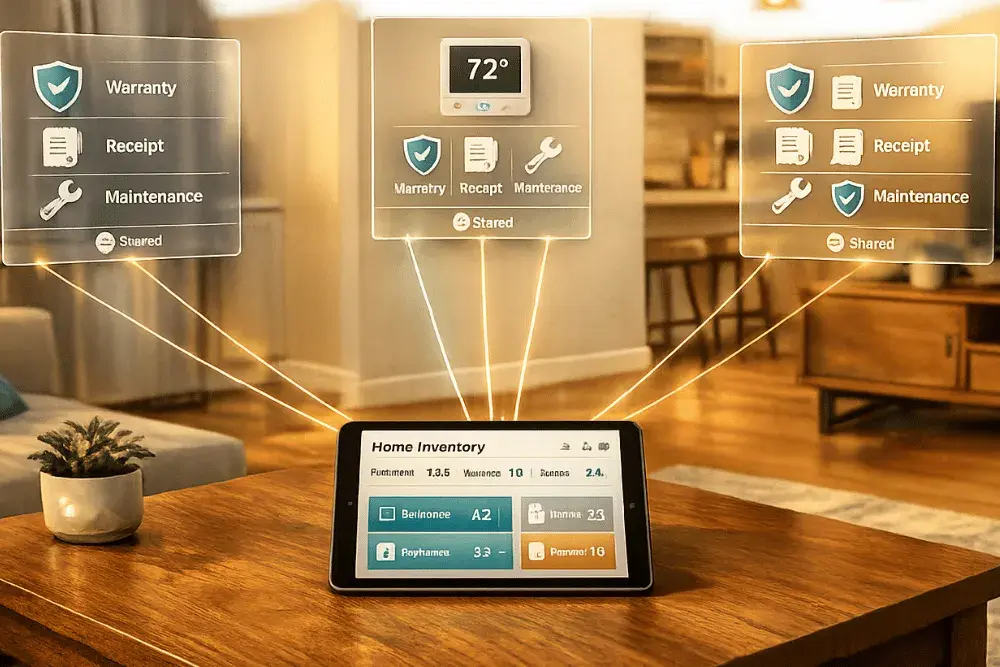
Managing a home can feel overwhelming when important details like warranties, maintenance schedules, and repair receipts are scattered. A shared home inventory solves this by creating a centralized, digital record of everything in your home, accessible by multiple members in real time. This approach simplifies property management, streamlines insurance claims, and ensures everyone involved - whether family members, property managers, or co-owners - has access to up-to-date information.
Here’s what you need to know:
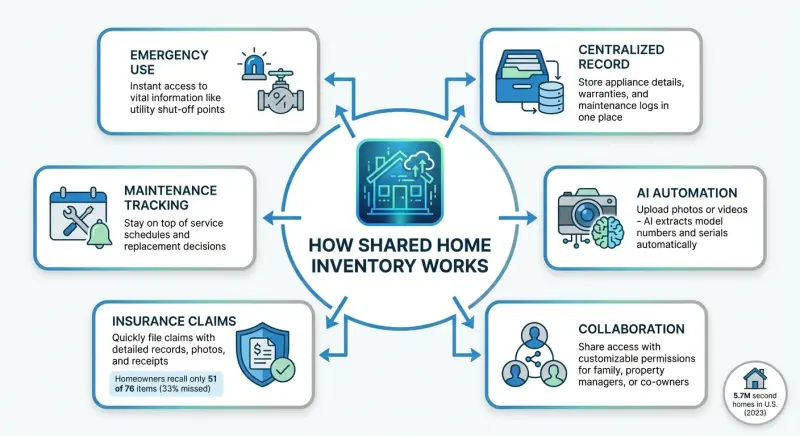
- Centralized Record: Store appliance details, warranties, and maintenance logs in one place.
- AI-Powered Capture: Upload photos or videos, and the system pulls out key details like model numbers and serials.
- Collaboration: Share access with others using customizable permissions.
- Insurance Claims: Quickly file claims with detailed records, including photos and receipts.
- Maintenance Tracking: Stay on top of service schedules and replacement decisions.
- Emergency Use: Provide instant access to vital information, like utility shut-off points, during urgent situations.
Platforms like HouseFacts make setup easy with tools like AI-powered data capture, shared calendars, and real-time updates. Whether for family homes, rental properties, or estate planning, a shared inventory reduces stress, improves organization, and saves time.
How Shared Home Inventory Works
What Is Shared Home Inventory?
A shared home inventory brings all your home details - like appliances, important documents, and personal belongings - into one place, accessible in real-time by multiple members. Unlike traditional, isolated records, these systems let authorized members update and access information from any device, anytime.
The standout feature here is collaboration. While traditional inventories depend on one person manually keeping everything up to date, shared systems allow you to grant access to others. This means tasks like managing maintenance or handling insurance claims can be shared. This is especially handy for the roughly 5.7 million second homes across the U.S. in 2023, where owners may not always be on-site to address issues [2].
This collaborative approach sets the stage for the features discussed below.
Core Features of Shared Home Inventory
AI-driven data capture takes the hassle out of manual data entry. Instead of typing out appliance details like model numbers, you can simply upload a photo or video walkthrough. The system pulls key details - brand, model, and serial numbers - and organizes them into a searchable database.
Access permissions give you control over who can see or edit what. For example, you might allow your spouse full editing access while limiting your property manager to view-only permissions for maintenance logs. With real-time collaboration, everyone stays updated. No more guessing when the HVAC was last serviced or scrambling to find the location of the water shut-off valve.
Your inventory lives alongside your maintenance schedules, warranties, and insurance records in the same place. Add a new water heater? You can add its warranty details, set your own reminders for maintenance, and log its replacement cost - all without switching tools.
These features streamline property management, making it more efficient and transparent.
Using Shared Inventory in Daily Property Management
Shared home inventory systems naturally fit into everyday property management, offering flexibility across different scenarios.
For family homes, they’re a game-changer when multiple household members need quick access to important information. Imagine you’re traveling, and your teenager needs to call a contractor. They can instantly pull up service contacts and warranty details without delays.
In rental or vacation properties, co-owners can keep tabs on appliance replacements and share costs fairly, backed by documented records. One owner might handle winter maintenance while another oversees summer tasks, using shared checklists to ensure nothing is missed.
In estate planning, these systems simplify transitions. Executors or heirs can access complete property records, reducing stress and ensuring clarity. More and more real estate agents and estate planners are leaning on these systems to provide transparency during sales or asset management.
Even in emergencies, shared access proves invaluable. When local contacts can quickly find utility shut-off points or pest control schedules, they can act fast - potentially saving thousands of dollars in damages.
Benefits of Shared Home Inventory
Easier Insurance Claims
When disaster strikes, trying to remember every single item in your home can feel impossible. In one study, a homeowner could recall only 51 items in their home office, even though a physical inspection revealed 76 - about 33% of belongings were overlooked [4].
Steve Severaid, President of The Greenspan Co./Adjusters International, highlights this challenge:
"All the stuff that we collect as people over the years … adds up to hundreds of thousands of dollars oftentimes. And to remember all those little things is nearly impossible." [4]
This is where a shared home inventory makes all the difference. With detailed records like photos, videos, serial numbers, and receipts, you can file insurance claims quickly without relying on memory. This not only speeds up the claims process but also ensures accurate assessments of your property.
Take Mary Knapp’s experience during the Jesusita Fire in May 2009. Thanks to her pre-documented inventory, State Farm was able to issue checks immediately, helping her rebuild much faster.
Beyond claims, a thorough inventory ensures your coverage limits are sufficient and supports tax deduction documentation. It also simplifies decisions about repairs or replacements, making it an essential tool for both emergencies and everyday home management.
Better Maintenance Tracking
Keeping track of home maintenance becomes far simpler with a shared inventory. By consolidating details like appliance warranties, purchase dates, service histories, and prices in one place, you eliminate the hassle of hunting for manuals or trying to remember when something was last serviced [1].
For example, if your dishwasher is 12 years old and the repair costs seem high, having its original purchase date and price at your fingertips can help you decide whether to repair or replace it.
This system is especially helpful for property managers overseeing multiple homes. Maintenance tools like lawn mowers, generators, or ladders can be tracked with ease, ensuring nothing slips through the cracks. Experts suggest updating your inventory annually or after significant purchases to keep it accurate [4].
With everything organized, maintenance decisions become more straightforward, and shared responsibilities feel less overwhelming.
Better Collaboration and Organization
A shared inventory transforms home management into a collaborative effort. Whether it’s spouses, adult children, or property managers, having instant access to appliance details, warranties, or service contacts makes decision-making faster and reduces miscommunication [1].
Visual records, like photos and videos, provide a clear picture of an item’s condition and keep everything neatly organized in one searchable database. This is especially useful during major life events, such as estate planning or dividing possessions equitably during a divorce [3].
Insurance agents also benefit from shared inventories, as they can review records to ensure high-value items are properly listed or covered by additional riders. This collective approach minimizes errors and streamlines transitions, whether you’re filing claims or managing property changes.
How to Set Up and Use Shared Home Inventory in HouseFacts
Creating Your Account and Adding Collaborators
To get started, click on "Sign Up" or "Start My Home Inventory" and provide your property details. Every plan starts with a 14-day trial; after that, the subscription costs $99 annually (that's $8.25 per month) or $9.99 per month under the Per Property plan. You can also upload a home inspection report, allowing the platform's AI to pull out important details and pre-fill your account for a smoother setup.
Invite collaborators like family members, spouses, or property managers to help manage your inventory. Adjustable access permissions let you control who sees what, ensuring your property data stays secure while still being accessible to the right people.
From there, you can begin documenting your belongings to build your inventory.
Adding Items to Your Inventory
Start by using your smartphone to snap photos or record videos of your appliances and other belongings. The AI steps in to identify key details like appliance type, brand, model, and location. You can even record a video walkthrough of your entire home, upload it, and let the AI handle the itemization for you - no need for tedious manual entries.
For receipts, warranties, and other documents, forward them to your Smart Inbox so they become part of your home's record. Making it a habit to send digital receipts as soon as you receive them keeps your records accurate and up to date.
For high-value items like electronics or major appliances, take close-up photos to capture details like brand, model, and serial numbers. If you prefer, you can manually upload receipts and invoices. The platform organizes these documents by vendor, service type, and improvements, making it easier to track your home's adjusted cost basis over time.
Once your inventory is set up, managing and sharing it becomes effortless.
Managing and Sharing Your Inventory
Your records are stored in a searchable timeline, so you can find what you need without the hassle of manual tracking. The timeline updates in real time as you add new information or forward emails to your Smart Inbox. This keeps your property history - covering costs, vendors, and timelines - comprehensive and up to date.
The platform also includes shared calendars for coordinating maintenance tasks and schedules. You can assign tasks and set permissions, ensuring that family members or property managers only access the information they need.
When it's time to file an insurance claim or plan repairs, you can quickly access everything in one place - photos, receipts, warranty details, and more. This organized approach saves time, simplifies decision-making, and ensures nothing gets overlooked when it matters most.
Keeping Your Shared Home Inventory Current
Setting Up Regular Update Schedules
To keep your home inventory accurate, it's important to make updates a regular habit. Aim to review your inventory annually, during any moves, and halfway through the year with a room-by-room check. These updates should account for new purchases, replacements, or items you've gotten rid of. Setting calendar reminders for these routine checks can make the process easier. For new purchases, take a moment to snap photos of receipts and serial numbers before tossing the packaging - this small step can save you a lot of hassle later.
If you're undergoing major changes like renovations or moving, take time to do a detailed update. This ensures your inventory reflects your home's current value and everything inside it.
"To help maintain an accurate inventory list, update it annually or anytime you move. This might help save you time and stress in the future if you experience a loss." - State Farm Editorial Team [3]
Once your inventory is updated, the next step is organizing and securely storing these records.
Organizing and Storing Your Records
Keeping your inventory safe and accessible is just as important as updating it. Use a cloud storage service and a fireproof safe or safety deposit box to protect your records. For easier navigation, organize items by room or category so you can quickly find what you need when the time comes [5][3]. If you're using tools like HouseFacts, its searchable timeline can organize records by vendor, service type, and home improvements, which is especially helpful for tracking your home's adjusted cost basis for taxes.
If you share access to your inventory with family members or property managers, make it a habit to review access permissions every month. Confirm that only the right people have access to sensitive financial details, and adjust permissions as needed. This simple step can help prevent security issues while ensuring everyone has access to just the information they need.
Conclusion
Keeping a shared home inventory simplifies property management and fosters collaboration. With all your home records in one place, you can say goodbye to frantic searches for important details. Features that support teamwork ensure everyone stays informed - whether it’s a partner managing household expenses, a property manager coordinating repairs, or an insurance agent reviewing coverage.
Platforms like HouseFacts take it a step further by using AI to pull details from photos and emails, cutting down on tedious manual entry. The result is less time spent hunting for paperwork and more confidence that your records are ready whenever you need them, for a claim, a sale, or simply peace of mind.
Think of your home inventory as a dynamic tool. Start by cataloging your most valuable items, use video walkthroughs to capture details quickly, and set a yearly reminder to keep your records up to date. Storing everything securely in the cloud ensures you always have access when you need it. By maintaining an updated inventory, you protect your home’s value and make property management a whole lot easier.
SOURCES
[1] HouseFacts. Home Inventory. https://www.housefacts.com/inventory
[2] HouseFacts. "Second Home Management for Absentee Homeowners: Stay Organized Year-Round." https://www.housefacts.com/post/second-home-management-for-absentee-homeowners-stay-organized-year-round
[3] State Farm Editorial Team. "How to Create a Home Inventory." https://www.statefarm.com/simple-insights/residence/home-inventory-how-to-create-one
[4] NerdWallet. "How to Create a Home Inventory for Insurance." https://www.nerdwallet.com/article/insurance/home-inventory-insurance
[5] Policygenius. "How to Create a Home Inventory." https://www.policygenius.com/homeowners-insurance/how-to-create-a-home-inventory
Keep reading
 organizationmaintenance
The 10 Numbers Every Homeowner Should Have Saved Before a Crisis Hits
Don't wait for a burst pipe or a midnight lockout to realize you're unprepared. Here are the 10 essential contacts every homeowner needs saved before an emergency strikes, plus a free printable template.
 organizationmaintenance
The Room-by-Room Spring Cleaning Checklist for Homeowners: Protect Your Home's Value
Spring cleaning goes beyond tidying up. Use this room-by-room home maintenance checklist to protect your home's value and catch costly repairs before they happen.
 organizationhousefacts
Beyond Checklists: How Premium Property Management Tools Let Your Second Home Thrive, Even When You’re Not There
Second homes come with double the maintenance and double the paperwork. Here’s how the right property management tools keep yours protected while you’re away.