What to Do With Your Home Inspection Report After Closing
 Elizabeth KiselevMay 8, 20268 min read
Most buyers treat the home inspection report as a one-time document. You read it, you negotiate a few repairs or a credit, you close, and the 50-page PDF drifts to the bottom of an email folder. A year later, when the water heater starts leaking or your insurer asks how old the roof is, that report is buried and forgotten.
That is a waste of the best written snapshot your house will ever get. The report already lists the age and condition of nearly every major system on the day you took ownership. Handled right, it becomes the foundation of your home's permanent record: the thing you revisit for maintenance planning, lean on when you file an insurance claim, and hand over as proof when you eventually sell.
This guide is about the part almost no one covers: what to do with your inspection report after closing, so its value pays off every year you own the home, not just during the week you negotiate.
Key Takeaways
- The report's lasting value is not the negotiation. It is the dated record of every system's age and condition on the day you bought.
- Pull the durable facts out of it right away: appliance and system ages, brands and model details, and the inspector's condition notes, organized by appliance and system.
- Manufacture dates and typical lifespans turn into a realistic maintenance and replacement calendar instead of a surprise.
- The report is strong evidence for an insurance claim later, because it documents the home's condition before any loss happened.
- Records of what you fix and improve can lower your taxable gain when you sell 1, so keep the report and every receipt that follows it.
Why the Report Is Your Home's First Permanent Record
A home inspection report is a written snapshot of a property's condition on the day the inspector walked through. It is not a pass or fail grade and there is no approval stamp at the end. Instead you get a detailed list of observed conditions, system ages, defects, and safety concerns.
Think of it as the house's first medical chart. It tells you what is there, how old it is, and what the inspector saw. Once you own the home, that same chart is the starting line for three things that matter for as long as you live there:
- Planning maintenance and budgeting for replacements before they become emergencies
- Documenting the home's condition so an insurance claim later has a credible baseline
- Building the paper trail that supports your home's value when you sell
The negotiation is the short-term use. The record is the one that keeps paying off. So before you file the PDF away, do the work to turn it into something you will actually reach for again.

Step 1: Pull the Durable Facts Out of the Report
Most of a 50-page report is narrative that made sense during your inspection contingency. A smaller set of facts stays useful for years. Your first job after closing is to find and save those.
Go system by system and capture, for each one:
- The item and where it is: water heater in the utility closet, furnace in the attic, main electrical panel in the garage.
- Its age or install year: often written outright ("water heater manufactured 2014") or read off a data plate photo.
- Brand, model, and serial number when the inspector recorded them, especially for the furnace, air conditioner, water heater, and major appliances.
- The inspector's condition note: what shape it is in and anything to watch.
This is the difference between a document you skimmed once and a record you can use. Knowing the roof is a 2016 architectural shingle in good condition is just as valuable later as knowing the panel needs attention now. Do not skip the sections marked satisfactory: those confirm what is working and give you a dated baseline for it.
If you want the report to live somewhere you will actually find it, this is where a home record system earns its keep. HouseFacts lets you save the report and file each of these facts as part of your home's ongoing record, so the water heater's install year is attached to the water heater rather than lost on page 34 of a PDF.
Step 2: Read the Codes So You Pull the Right Facts
You do not need to memorize a report to mine it, but a little fluency helps you spot what is worth saving. Most reports rate each item and flag the ones that need action.
Common color coding:
- Green: satisfactory, functioning, good condition
- Blue: minor or cosmetic, low priority
- Yellow: moderate, needs attention
- Red: major issue, safety hazard, urgent repair
Standard abbreviations you will see:
- I (Inspected) and NI (Not Inspected, often blocked or inaccessible)
- NP (Not Present at this property)
- S (Safety Concern) and R (Repair)
- D (Defect) and RR (Repair or Replace)
- AE (Additional Evaluation Recommended by a specialist)
Check the legend in your specific report, since each company's scale differs slightly. Items marked S, R, D, or AE are the ones that belong at the top of your action list. Items with an age or a "monitor" note are the ones that belong in your maintenance calendar, which is the next step.
Step 3: Turn Ages Into a Maintenance and Replacement Calendar
This is where the record starts saving you money instead of just informing you. Once you know how old each system is, you can line it up against typical lifespans and see what is coming.
A few common benchmarks:
- Water heaters typically last about 10 to 15 years 4.
- Roof coverings, HVAC equipment, and other major components each have their own expected service life, and reference charts exist for nearly every one 4.
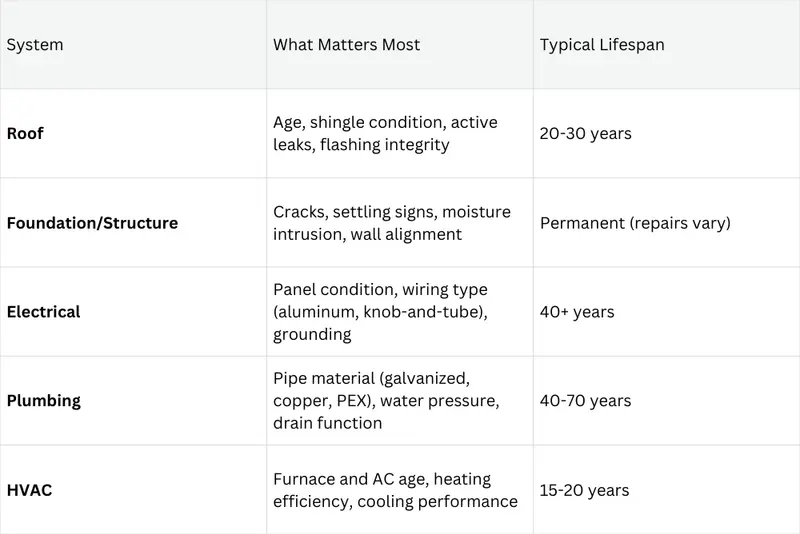
Subtract the install year from today, compare it to the lifespan, and you have a rough runway. A furnace from 2008 is not an emergency, but it does tell you to start budgeting rather than be blindsided by a January failure. When the report flags aluminum wiring, galvanized plumbing, or a data plate you can barely read, note it. Those details shape both your upcoming costs and, in some cases, your insurance coverage.
For the systems with a serial number, there is one more layer worth capturing. A serial number decodes to the manufacture date, and the manufacture date is what tells you the true age and where the item sits in its lifespan. HouseFacts Appliance Intelligence reads a serial number into that manufacture date, the expected lifespan, and any active recalls on record, so an aging appliance in your inspection report becomes a dated entry you can plan around. Each appliance also keeps its own service history, so every repair and tune-up you log later stays attached to the unit it belongs to.
While you are at it, cross-check the big appliances against the U.S. Consumer Product Safety Commission's recall list 2. An inspection tells you a dryer or dishwasher is present and working. It does not tell you the model was recalled, and that is worth a two-minute check.
Step 4: Keep the Report as Insurance-Claim Evidence
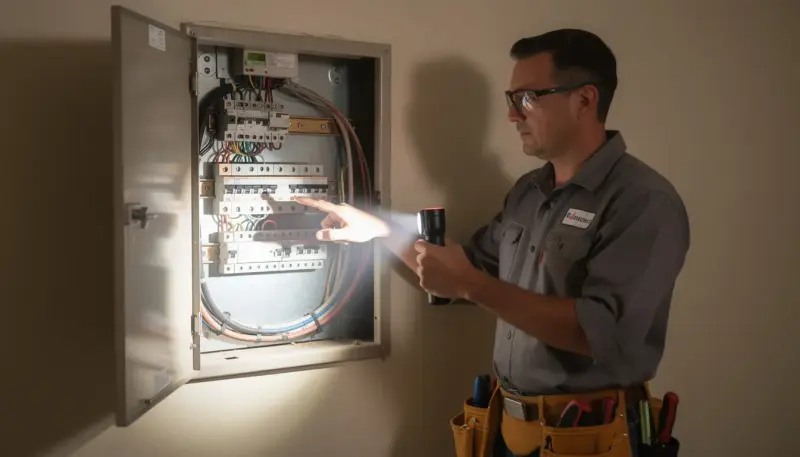
Here is a use almost nobody plans for until they need it. If a pipe bursts, a storm takes the roof, or a fire damages the kitchen, your insurer wants to know the condition and value of what was lost before the loss. Emergency preparedness guidance recommends keeping a household inventory and key property documents exactly for this reason 3.
Your inspection report is a head start on that inventory. It already documents, on a dated basis, what systems and major appliances were in the home and what shape they were in when you bought it. Paired with the receipts you gather afterward, it helps establish that the roof was sound last year or that the water heater was newer than the adjuster assumed.
This is why the record matters more than the negotiation. The report you save today can support a claim you cannot foresee. When you log what each repair and replacement costs over the years, those spending records pay off at claim time, warranty time, and tax time, long before you ever think about selling.
Step 5: Build the Resale Paper Trail Starting Now
Selling is the bonus at the end, not the point, but the record you keep from day one is what makes that day easier. Two pieces matter.
First, taxes. The IRS lets you add the cost of qualifying improvements to your home's cost basis, and a higher basis can lower the taxable gain when you sell 1. That only works if you kept the records. The inspection report is the opening entry, and every improvement receipt after it belongs in the same place.
Second, buyer confidence. When you eventually list, a documented history of what was inspected, maintained, and replaced answers the questions your buyer's own inspector will raise. A home with a clear record reads as a home that was cared for.

Don't Forget What the Report Left Out
A standard inspection covers visible, accessible areas. It does not include destructive testing, and several things fall to separate specialists, especially in older or rural homes:
- Septic systems, private wells, and water quality
- Radon, mold, asbestos, and lead-based paint
- Termites and other wood-destroying pests
- Sewer line camera inspection and underground oil tanks
- Swimming pools and spas
Ask your inspector or agent which of these are common concerns in your area. When you do order one of these separate reports, file it in the same place as your inspection. The point of a permanent record is that it is one place, not five folders.
A Quick Word on the Negotiation Itself
If you are reading this before closing, the short-term use still matters. Most contracts include an inspection contingency period, often 7 to 10 days, to review findings and respond. Focus your negotiation energy on items that are expensive to fix, hard to access, or a safety risk: foundation movement, active roof leaks, unsafe electrical panels, ongoing moisture. Cosmetic wear rarely earns much. Your agent knows local norms and can help you draft a repair request or ask for a price credit.
Then, once the deal closes, come back to the five steps above. The negotiation ends. The record does not.

Bottom Line
Your inspection report does two jobs. It helps you negotiate before closing, and then it becomes the first page of your home's permanent record for every year after. Most buyers only ever use the first job.
- Pull the durable facts (ages, models, condition notes) out while the report is fresh
- Line up ages against lifespans to build a real maintenance and replacement calendar
- Keep it as claim evidence, a dated baseline of the home's condition before any loss
- Start the resale paper trail now, because improvement records can lower your taxable gain later 1
HouseFacts is built for exactly this second life of the report. You can save your inspection and file its details as part of your home's ongoing record, let Appliance Intelligence read a serial number into its manufacture date, lifespan, and any active recalls, and keep the spending records that pay off at claim, warranty, and tax time. The report you already paid for is worth far more than one negotiation. Give it somewhere permanent to live.
SOURCES
- Internal Revenue Service, Publication 523: Selling Your Home (recordkeeping and cost basis of improvements). https://www.irs.gov/publications/p523
- U.S. Consumer Product Safety Commission, Recalls. https://www.cpsc.gov/Recalls
- Ready.gov (U.S. Department of Homeland Security / FEMA), Financial Preparedness (household inventory and property documentation). https://www.ready.gov/financial-preparedness
- InterNACHI, Standard Estimated Life Expectancy Chart for Homes. https://www.nachi.org/life-expectancy.htm
Keep reading
 appliancesmaintenance
Your Water Heater Might Fail. Whether Insurance Pays for the Damage Comes Down to a Few Words in Your Policy.
Does homeowners insurance cover water heater leaks? Usually yes if the failure is sudden, no if it's gradual. Here's how to protect your claim before it happens.
 maintenance
What Homebuyers Notice in Your Yard (Before They Even Walk Inside)
Selling your home? Buyers judge your yard in seconds, and it can cost you thousands. Here's what they notice and the low-cost fixes that can protect your price.
 appliancesseasonal
The Things That Live Outside: A Guide to Outdoor Appliance Safety
Keep your grill, generator, and outdoor appliances safe year-round. Practical tips on fuel, electrical safety, and off-season storage for homeowners.