Understanding Cost Basis Adjustments for Your Home
 HouseFacts Home ResearcherNovember 13, 20257 min read
For most homeowners, selling a home often means a profit, but it can also mean a tax bill. The amount of tax you may owe depends on your adjusted cost basis, not just what you originally paid. If you want the bigger picture first, start with how capital gains tax applies when you sell.
By understanding how your basis is calculated and how to properly track improvements over time, you can reduce your taxable gain and keep more of your home’s value. Here's how it works. (One note before we start: this is general information, not tax advice. Rules change and situations differ, so consult a tax professional about your specific circumstances.)
1. What Is Cost Basis?
Original Basis
Your original basis is generally the amount you paid to purchase the home, including:
- Purchase price
- Certain settlement and closing costs not deducted elsewhere
Examples of includable costs:
- Abstract fees
- Utility installation charges
- Legal fees related to the purchase
- Recording fees
- Survey costs
- Transfer taxes
- Title insurance
- Any seller debts you agreed to pay (e.g., back taxes)
2. Why Cost Basis Matters: Tax Impacts
Your adjusted basis plays a major role in calculating your capital gain when you sell your home:
Capital Gain = Selling Price minus Selling Expenses minus Adjusted Basis
Even if you qualify for a gain exclusion, it's important to calculate your basis properly to avoid overpaying on taxes.

3. Tax Implications When Selling a Home
Sale of a Primary Residence
You may be eligible for a valuable tax break under Section 121 of the IRS Code.
Section 121 Exclusion
What It Does:
Allows you to exclude part (or all) of the capital gains from taxation.
Exclusion Limits:
- Up to $250,000 (single or married filing separately)
- Up to $500,000 (married filing jointly)
Eligibility Requirements:
- Ownership Test: You must have owned the home for at least 2 years out of the last 5 years before the sale.
- Use Test: The home must have been your primary residence for at least 2 years out of that 5-year period.
(The two years do not have to be consecutive.)
Frequency Rule:
You may claim the exclusion once every two years.
Partial Exclusion:
If you don’t meet the requirements due to unforeseen circumstances, such as health issues or job relocation, you may still qualify for a partial exclusion.
Sale of a Secondary Home
If you're selling a vacation home, rental property, or any residence that’s not your primary home, Section 121 does not apply in most cases.
No Exclusion Available
- Secondary homes generally do not qualify for the capital gains exclusion.
- Partial exclusions may be available in rare, complex situations.
Capital Gains Tax Rates
- Short-Term Gains: owned for 1 year or less → generally taxed at ordinary income rates
- Long-Term Gains: owned for more than 1 year → generally taxed at reduced capital gains rates (0%, 15%, or 20%, depending on income)
What If You Sell at a Loss?
- Investment Property: losses may be deductible as capital losses (subject to IRS limits)
- Personal-Use Property (e.g., vacation homes): losses are generally not deductible
4. Capital Improvements vs. Routine Repairs
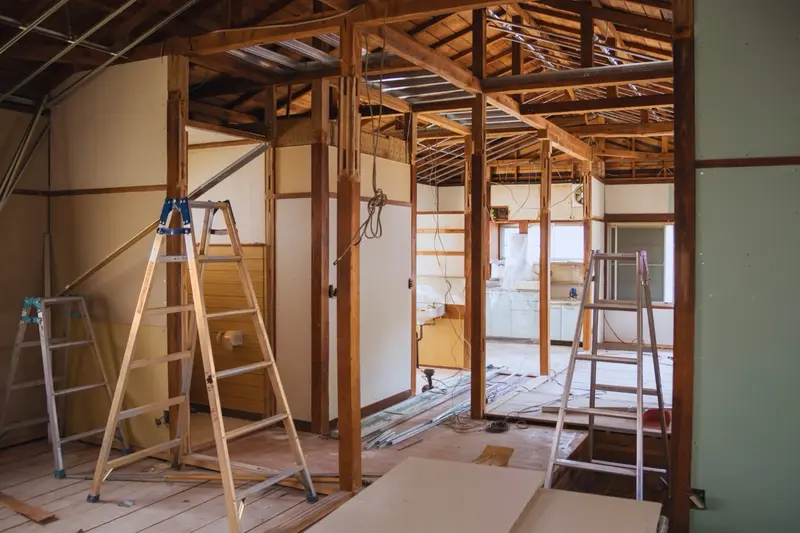
It’s important to distinguish capital improvements from regular maintenance. The general test the IRS applies: an improvement adds value to your home, prolongs its useful life, or adapts it to new uses. A repair simply keeps the home in ordinary operating condition.
Improvements That Can Adjust Your Basis
Here are the major categories, with concrete examples and typical cost ranges (national ballparks; your market will vary):
| Category | Examples that can count | Typical cost range |
|---|---|---|
| Additions | Room or story addition, finished basement or attic, added bathroom, deck or porch | $20,000 to $150,000 |
| Kitchen and bath | Full remodel, new cabinetry, built-in appliances, new countertops | $15,000 to $80,000 |
| Systems | New HVAC system, water heater replacement, electrical panel upgrade, whole-house repiping | $1,500 to $25,000 |
| Exterior | New roof, new siding, replacement windows and doors, insulation | $5,000 to $40,000 |
| Grounds | New driveway, in-ground pool, retaining wall, fence, landscaping with lasting value | $3,000 to $80,000 |
| Plumbing and water | Septic system, water filtration system, sump pump installation | $1,500 to $20,000 |
| Other | Home security system, solar installation, accessibility modifications | $1,000 to $30,000 |
A quiet detail many homeowners miss: a new HVAC system alone can add $10,000 or more to your basis, but only if you can prove it with paperwork.
What Does NOT Count
Repairs and maintenance generally do not adjust your basis, no matter how much they cost over the years:
| Doesn't count | Why not |
|---|---|
| Painting (interior or exterior) | Maintenance, unless part of a larger remodel |
| Fixing leaks, patching a roof, replacing a broken shingle | Restores condition; doesn't add value or life |
| Appliance repairs, AC tune-ups, furnace servicing | Upkeep of existing systems |
| Lawn care, hedge trimming, gutter cleaning | Routine maintenance |
| Replacing broken hardware, fixtures, or window panes | Like-for-like repair |
| Improvements later removed or replaced | If you replaced the carpet twice, generally only the current one counts |
One useful wrinkle: repairs done as part of an extensive remodel can generally be included in the cost of the overall improvement. Repainting a room on its own is maintenance; repainting it as the final step of a full renovation rides along with the project. For a practical walkthrough of what to save and what to skip, see tracking home projects for cost basis.

5. Documentation to Keep
The IRS can ask you to prove every dollar of your adjusted basis. That means keeping records for as long as you own the home, plus generally at least three years after you file the return reporting the sale. For a house you hold for decades, that's decades of paperwork.
| Document | What to include |
|---|---|
| Receipts | Date, vendor, cost |
| Invoices | Description of work, materials, and labor |
| Contracts | Contractor details, scope, payment terms |
| Proof of payment | Cancelled checks, credit card or bank statements |
| Permits | Local approvals for major work |
| Photos | Visual record before, during, and after |
Two habits make this manageable. First, capture the document the day it arrives, not "when you get around to filing." The receipt you threw away can cost you thousands at exactly the moment you can't get it back. Second, keep the closing paperwork from the day you bought, since that's where your original basis lives; here are the documents from closing you'll wish you kept.
Example: Cost Basis Calculation Over 20 Years (Through Sale in 2025)
Here's an illustration of how a homeowner's cost basis can build over two decades of ownership:
| Year | Item | Impact on basis | Running total |
|---|---|---|---|
| 2005 | Original purchase price | $300,000 | $300,000 |
| 2005 | Closing costs (eligible) | +$8,000 | $308,000 |
| 2008 | New HVAC system | +$12,000 | $320,000 |
| 2010 | Kitchen remodel | +$45,000 | $365,000 |
| 2012 | Roof replacement | +$25,000 | $390,000 |
| 2015 | Insurance reimbursement for storm damage (decrease) | -$15,000 | $375,000 |
| 2018 | Addition of primary suite | +$85,000 | $460,000 |
| 2022 | New windows throughout | +$28,000 | $488,000 |
2025 Sale Price: $800,000
Gain Calculation
| With records | Without records | |
|---|---|---|
| Adjusted basis | $488,000 | $308,000 |
| Capital gain | $312,000 | $492,000 |
Tax implications (single filer, illustrative):
- With records: $62,000 over the exclusion → roughly $9,300 in tax at a 15% rate
- Without records: $242,000 over the exclusion → roughly $36,300 in tax at a 15% rate
- Difference: keeping the receipts can save this homeowner around $27,000
Actual rates depend on your income and situation, which is one more reason to run the numbers with a tax professional before you sell. Note the 2015 line, too: basis can go down as well as up. Insurance payouts for casualty losses, certain energy credits, and depreciation you claimed (for a home office or rental use) can all reduce your basis.
6. Why It Matters
Tracking and documenting your cost basis can protect you from paying unnecessary taxes. Even if you qualify for a capital gains exclusion, an accurate basis helps make sure you're not overpaying if:
- You exceed the exclusion limits
- You own multiple properties
- You’ve made significant improvements over time
- You inherit a home, where step-up basis and the records you keep follow their own rules
HouseFacts makes the record-keeping side simple.
Forward a receipt or invoice by email and it lands in the right home, filed by vendor and date. Keep your records organized, accessible, and ready, so they pay off while you own the home, and you're prepared when it's time to sell.
Keep reading
 organizationmaintenance
The 10 Numbers Every Homeowner Should Have Saved Before a Crisis Hits
Don't wait for a burst pipe or a midnight lockout to realize you're unprepared. Here are the 10 essential contacts every homeowner needs saved before an emergency strikes, plus a free printable template.
 organizationmaintenance
The Room-by-Room Spring Cleaning Checklist for Homeowners: Protect Your Home's Value
Spring cleaning goes beyond tidying up. Use this room-by-room home maintenance checklist to protect your home's value and catch costly repairs before they happen.
 organizationhousefacts
Beyond Checklists: How Premium Property Management Tools Let Your Second Home Thrive, Even When You’re Not There
Second homes come with double the maintenance and double the paperwork. Here’s how the right property management tools keep yours protected while you’re away.